
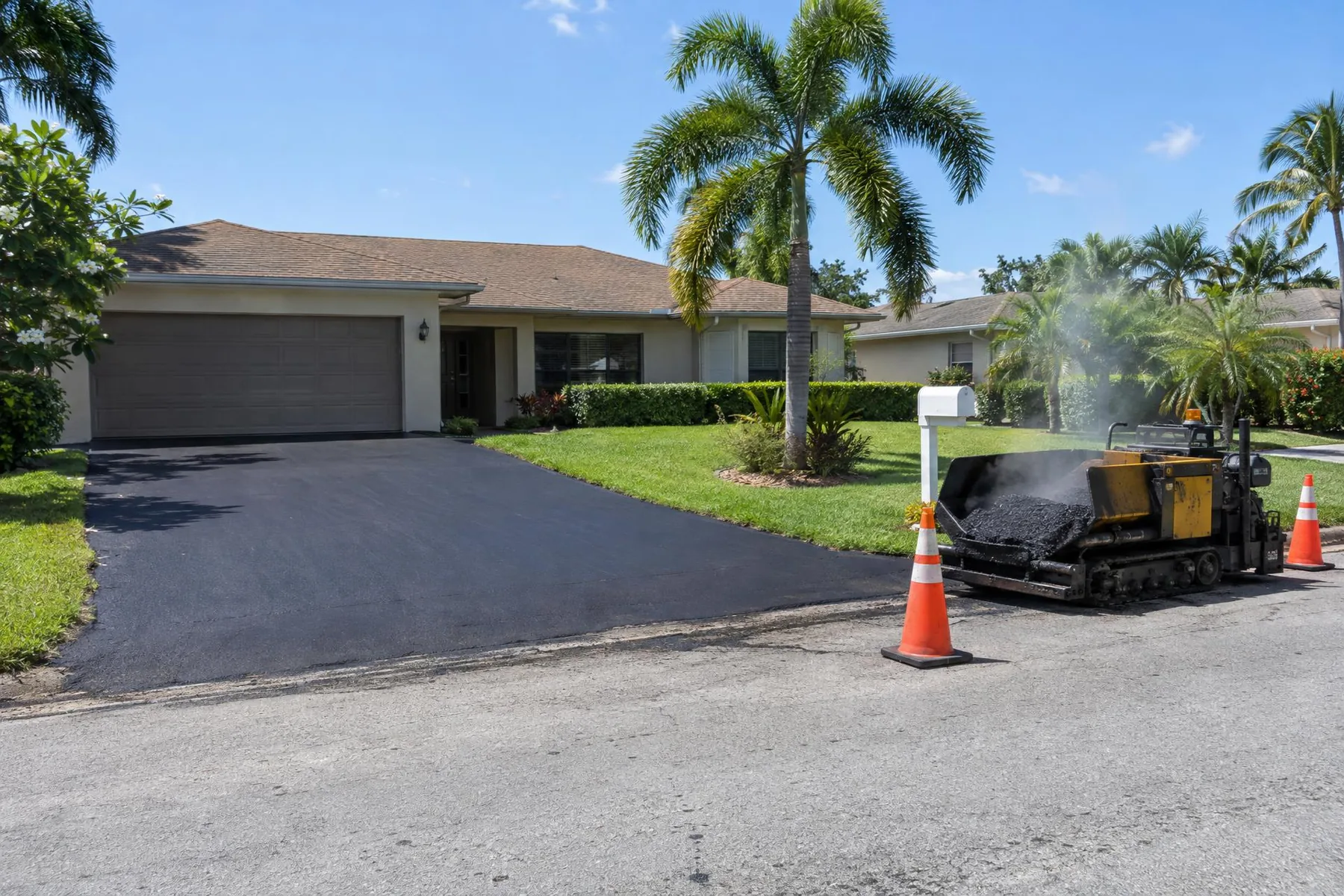
Freshly laid black asphalt driveway beside a single-story stucco home with a small paving machine and cones at the curb

How Asphalt Paving Works in Tamarac, FL: How Long Before You Can Drive On New Asphalt

How Asphalt Paving Works on a Tamarac, FL Driveway or Parking Lot, Step by Step

If you have wondered what happens between the first call and a finished surface, Tamarac Asphalt Paving & Repair walks through it for Tamarac, FL and Broward County. This page explains how asphalt paving works, the paving process, how long a surface lasts and how long before you can drive on new pavement. Stone goes down, hot mix goes on top, and a roller compacts it. The sections below cover each stage on driveways, lots and private roads.

Why homeowners choose us:

  • Free written estimates for every paving job
  • Compacted base under every new surface, not just a layer of asphalt on top
  • Warrantied work every job backed by a written warranty
  • Licensed and insured certificate on request

Our crew has 20+ years of experience paving in South Florida and 1,400+ driveways, lots and roads behind it. Every job follows the same steps, and the estimate names them before any digging starts. You get a free written estimate and a written warranty, so the work is covered in writing from the first day.

Get a FREE Asphalt Paving Quote

How Asphalt Paving Works: Why Tamarac Pavement Cracks First

Asphalt is only the top of the pavement. A residential surface is 3 to 5 inches of asphalt over a 4 to 8 inch rock base, and the base does most of the work. When water weakens that base, the asphalt above it flexes under tires, cracks and breaks apart. Poor drainage and a weak base or poor compaction are what damage a surface most.

Tamarac’s ground makes this worse. The sandy soils mapped in the area, such as Hallandale, Margate and Pompano fine sand, can have a water table as shallow as 6 inches in the wet months. A base sitting that close to water loses strength when it is soaked, so the wheel paths crack first and potholes follow.

The rain adds to it. Tamarac’s rainy season runs from May 15 to October 15 and brings nearly 70% of the year’s rain. Water enters through every open crack, softens the stone and widens the damage, which is why small cracks should be fixed right away. A paving contractor in South Florida makes the same point: fix a drainage problem first, or you will end up spending twice as much. Good paving is therefore mostly about the base, the drainage and the compaction under the surface. The asphalt on top is what you see, but the work under it decides whether the pavement is still smooth in ten years.

How Asphalt Paving Works in Five Steps on a Tamarac Driveway or Parking Lot

The asphalt paving process is the same on every surface, and only the size of the job changes with the property.

1. Estimate and Base Check

You call, and we set up a visit. We walk the surface, probe the weak areas and look at where water goes after a storm. The free written estimate lists the base work, the thickness after compaction and the price, so you know the scope before anything starts.

2. Removing the Old Surface and Preparing the Base

The crew breaks out and hauls away the failed asphalt, then digs out any soft ground. New stone is laid and compacted in layers until the base is firm and the grade drains. This is the step that decides how long the surface lasts, and wet ground is the usual reason it takes longer.

3. Laying the Hot Mix

A tack coat is sprayed where new asphalt meets old, and hot mix asphalt is laid at the thickness on your estimate. A paver spreads it evenly, and the crew works the seams and edges by hand so water cannot get under them. Rain stops this step, because wet pavement does not bond.

4. Rolling and Compaction

A roller compacts the mix while it is still hot, which gives the surface its density and strength. The crew checks the grade with a level and water so puddles do not form. A well-rolled surface sheds Tamarac’s summer rain, while a thinly compacted one starts to ravel within a season or two.

5. Cure and Handover

Cones keep cars off the new surface, and the crew tells you when it can be used. We walk the finished job with you, answer questions about sealcoating and put the written warranty in your paperwork. Any section that needs later attention is noted so you can plan for it.

How Long Does Asphalt Last in Tamarac, and When Can You Drive on New Asphalt

Asphalt typically lasts 15 to 30 years, with an average of about 20, and an overlay lasts 8 to 15 years. A strong base, working drainage and regular sealcoating keep Tamarac’s wet ground and summer rain from shortening that. New asphalt also needs time to cure, and the timeline depends on who is using it:

  • Walking and pets should stay off for at least 24 hours.
  • Cars and light vehicles can drive on a new surface after about 48 to 72 hours at a minimum, and some sources say three to five days.
  • Heavy trucks should wait another week or two.
  • Full cure takes about six months, and one South Florida contractor says six to 12 months.
  • Sealcoating is first done about six months after installation, then every few years.

Together the lines above answer how long before you can drive on new asphalt, and how long does new asphalt take to cure is covered by the full-cure line. Sharp turns while parked leave marks in the first few days, so avoid turning the wheel while the car is still. The crew sets cones and tells you which of these apply to your job.

How Asphalt Paving Works on Resurfacing and Repair Jobs in Tamarac

Not every job starts from bare ground. On a resurfacing, the old surface stays in place. Cracks are filled, the surface is cleaned, a tack coat is sprayed and a new layer of about 1.5 to 2 inches goes down and is rolled. The work is quicker and costs less, and it works only when the base is sound.

A repair is smaller still. The failed spot is cut out with square edges, soft stone is rebuilt, and new asphalt is placed and compacted flush with the surface. Cracks are routed clean and filled with hot sealer. Repairs made early keep water out of the base and put off the cost of a larger job. Most owners who call about a small crack save money by acting before the rainy season, when water has not yet had months to work on the base underneath. A short visit sorts out whether a repair, an overlay or a full repaving is the right fit.

Our pages on asphalt resurfacing, asphalt repair and driveway paving go through each in detail, and the cost page shows what each one runs.

How Asphalt Paving Works FAQs: Tamarac, FL

How does asphalt paving work?

A crew prepares and compacts a stone base, lays hot mix asphalt at the planned thickness and rolls it while it is hot. The base, the drainage and the compaction decide how long the surface lasts.

How long does asphalt last in Tamarac, FL?

Asphalt typically lasts 15 to 30 years, and an overlay lasts 8 to 15. A firm base and regular sealcoating protect it from Tamarac's wet ground and heavy rain.

How long before you can drive on new asphalt?

Keep cars off for at least 48 to 72 hours, and keep heavy vehicles off longer. The crew tells you when the surface is ready.

How long does new asphalt take to cure?

Full cure takes about six months, and a South Florida contractor says six to 12 months. The surface is usable long before that, but it stays soft in the heat.

How thick should an asphalt driveway be?

A residential asphalt driveway is typically 3 to 5 inches thick over a 4 to 8 inch rock base. Ask whether a quoted thickness is before or after compaction.

When should new asphalt be sealcoated?

The first sealcoat usually goes on about six months after installation, then every few years. The crew can advise on timing for your surface.

Why does asphalt crack in Tamarac?

Water enters through small cracks and softens the base, which sits close to the water table in the wet months. The surface then flexes and breaks.

Tamarac Asphalt Paving & Repair serves Tamarac and Broward County.

Get a Free Asphalt Paving Quote in Tamarac, FL

(954) 807-4329 Get a Free Quote